What work should the system support?
We clarify the decision or process behind the proposed change, who will use the result, and what a dependable outcome means to them.
Business goal and success conditionsFor business leaders, CTOs, and data and AI leads
Planning a data platform, an AI application built on company data, or a major change to your current setup? I help connect the business goal with data sources, metrics, and AI components in a design your team can review, sequence, and implement. We start with the decision the system needs to support.
Discuss architecture design
For more than ten years, I have worked across data, technology, and business decisions. When designing an architecture, I look at where data comes from, what it means to the people using it, and what work AI needs to handle. Only then does it make sense to choose specific tools.
That is where leadership expectations meet the data team’s capabilities and the needs of the people who will use the result.
An architecture is more than a diagram of boxes. It should explain why each part exists, how work passes between them, and what decisions remain.
We clarify the decision or process behind the proposed change, who will use the result, and what a dependable outcome means to them.
Business goal and success conditionsWe map relevant sources, data flows, transformations, metrics, semantic context, and where an AI agent or another AI capability fits.
Target components and their interfacesWe account for access, human oversight, quality evaluation, cost, ownership, and how each component can change safely.
Operations, risk, and future developmentYou get a basis for a specific decision, not a catalog of every available technology. We agree on the depth of the design around the question you need to answer.
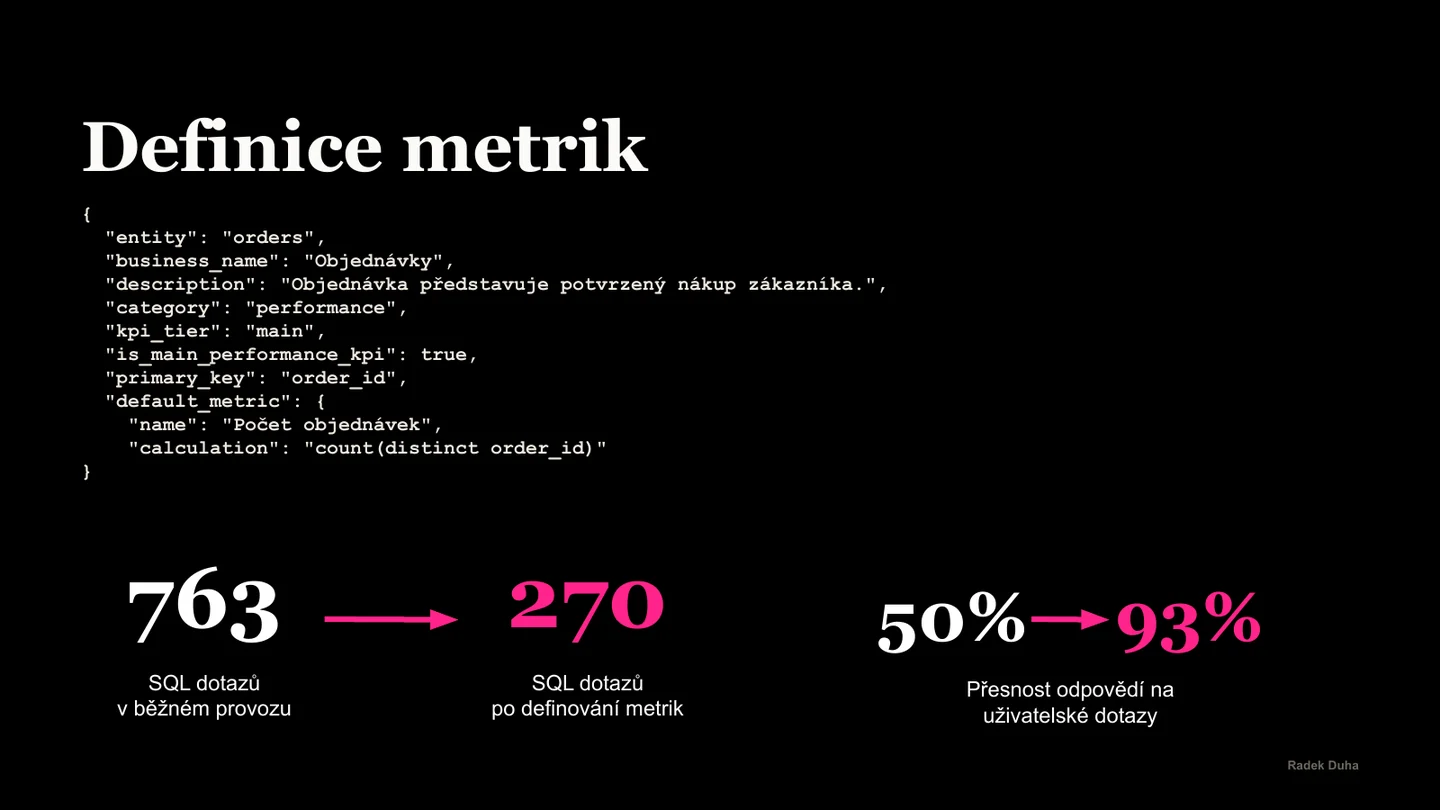
A public talk and a team project example
In my Measure Club talk, I explained why an agent needs business context, metric definitions, and a sound data model. QuantumSpring’s public case study describes a team effort to build a semantic layer and evaluations; I attribute its results to the work of the full team.
First, we define the question and involve the people who know the work. Then I review the materials needed for the design and prepare options for discussion.
We agree on what the system needs to make possible, which parts belong in the design, and who needs to be involved.
We work through the relevant sources, metrics, processes, current tools, and operational requirements.
We review the target setup, options, risks, and first steps. Any follow-up work is agreed separately.
The scope follows the decision the design needs to support. We agree on deliverables and working conditions before the engagement begins.
The goal and scope, the people involved, the materials or access needed, the deliverable, timing, price, and any follow-up work that would be a separate engagement. We start only when we have a shared understanding of all of these.
Before working with nonpublic data, we will agree in writing on which sources may be used, where they may be processed, who has access, and whether external AI tools are allowed. I do not work with nonpublic data without that agreement.
A data audit reviews the current state and helps identify what needs attention. Architecture design describes the target setup and the decisions that lead to it. Depending on the information available, starting with an audit may make sense.
No. We start with the goal, current environment, and constraints. Specific technologies are assessed according to the role they need to play.
Not automatically. The design describes the target setup and next steps. Technical delivery, migration, or AI implementation would be agreed separately based on your needs and capacity.
Yes, if we have enough material and clear questions to assess. Before we start, we agree which parts I will review and what you need from the review.
It depends on the system’s scope, the material available, and the people who need to be involved. After an initial conversation, I will propose the scope, deliverable, timing, and price. We start only once those are agreed.
Tell me what decision you need to make and which systems are involved. We can work out whether architecture design, a data audit, or another first step makes sense.
Prefer writing from your own inbox? jsem@radekduha.cz